



Last Updated: November 26, 2026
Quick Summary
Cross docking reduces warehouse dwell time by transferring freight directly from inbound trailers to outbound trucks, so goods never enter storage. Freight is received, sorted at the dock, and loaded out, often within hours rather than days. This skips put-away, racking, and retrieval, which removes the biggest source of delay.
- Pre-receipt notification sends SKU counts, pallet counts, carrier, and ETA to the dock team before arrival.
- Assign dock doors by freight destination rather than by arrival order to speed direct transfers.
- Measure one full month of baseline dwell time by inbound lane, carrier, shift, and product family.
- Report average dwell time alongside the 90th percentile to expose shipments that blow past their window.
- When crew falls below the minimum, reduce doors in service rather than spreading thin across all of them.
Table of Contents
- How does cross docking reduce warehouse dwell time?
- The cross-docking process steps, from arrival to outbound
- Cross-dock scheduling: matching dock doors to inbound and outbound loads
- Cross-dock performance metrics that prove dwell time is falling
- Cross-docking vs. warehousing: when each one earns its keep
- Contingency planning for the delays that wreck a cross-dock day
- Request a cross-docking rate for your freight
- Frequently Asked Questions
How does cross docking reduce warehouse dwell time?
Warehouse dwell time is the total time freight spends inside a facility, from arrival to departure.
The logic is simple. When freight goes straight from one trailer to another, you skip put-away, racking, and later retrieval.
Below, we break down the full cross-docking process, how to schedule it, and how to measure whether dwell time is actually falling.
The cross-docking process steps, from arrival to outbound
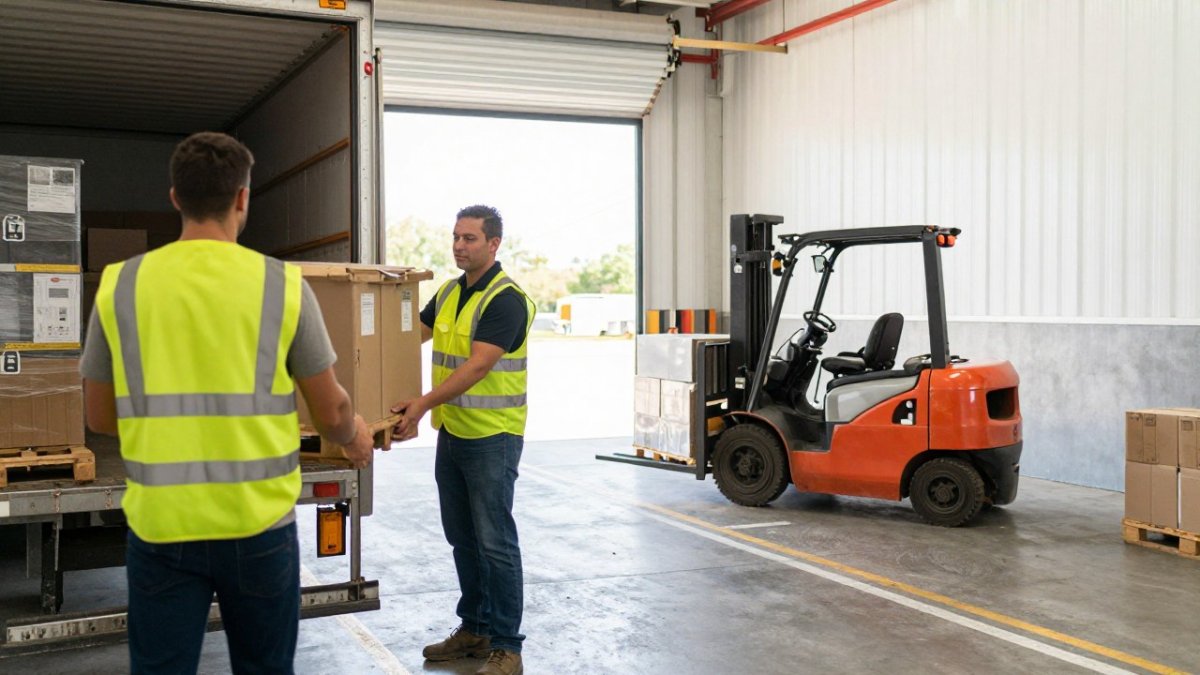
The cross-docking process steps follow one path: notify, receive and sort, then load out. Each step has to be tight, because a slow handoff at any point pushes freight back into storage.
Step 1: Pre-receipt and inbound notification
Everything starts before the truck arrives. You need the inbound shipment details early: SKU counts, pallet counts, carrier, and ETA.
Send that data to the dock team in advance. They can then plan door assignments and stage space before freight shows up.
A common mistake is treating notification as paperwork. It is the step that decides whether the rest of the day runs smoothly.
Step 2: Receive, sort and stage at the dock
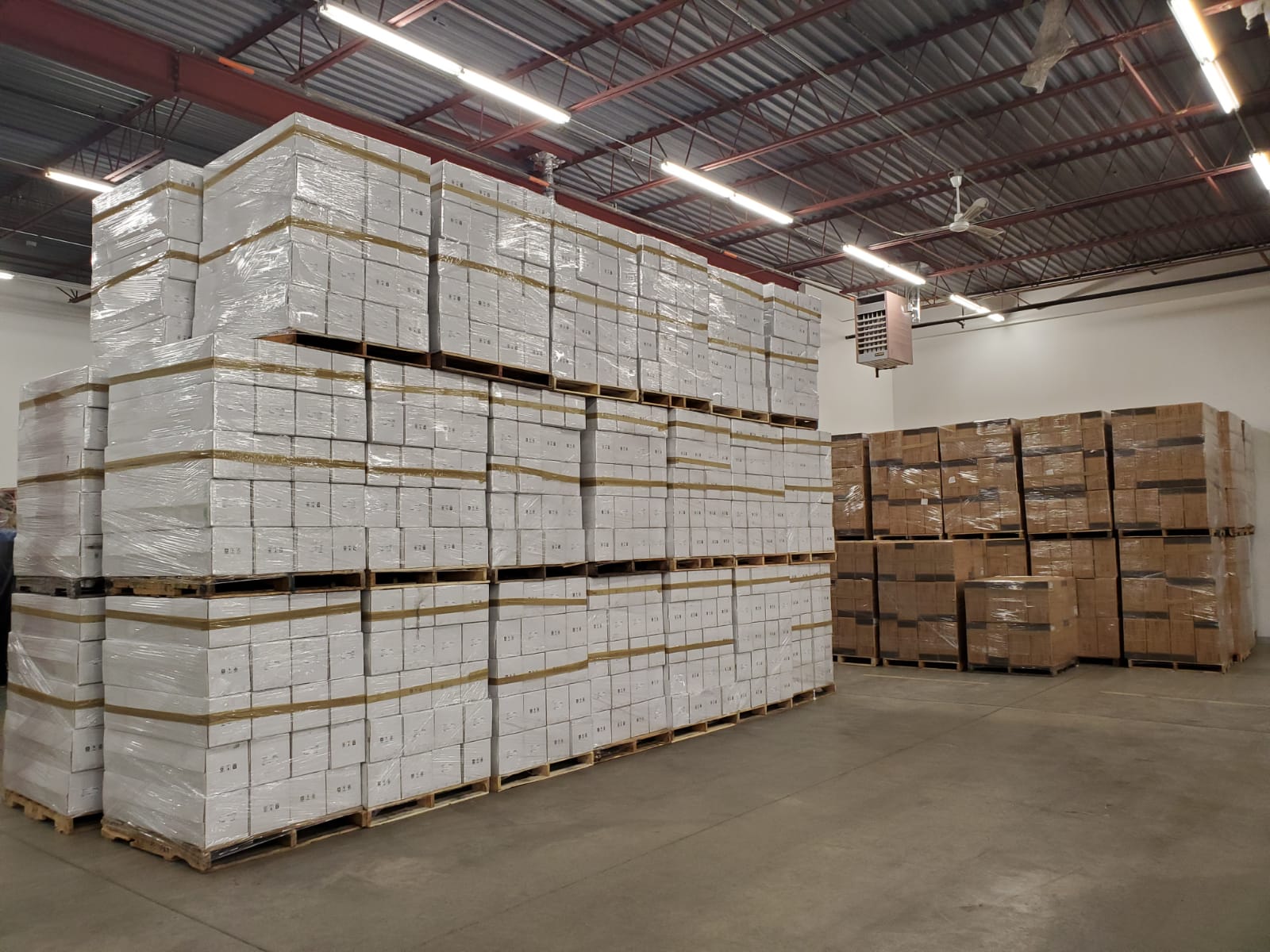
Freight gets checked against the inbound record, then sorted by destination. Sorted loads go to a staging lane, not to a rack.
Keep staging lanes close to the doors. Short travel distance means faster transfer time and less material handling.
Step 3: Load out and confirm departure
Outbound loads get built and loaded as soon as the receiving scan is complete. Confirm the departure scan so the clock stops on that shipment.
That departure record is what proves your dwell time is dropping. Without it, you are guessing.
The cross-docking process follows three tight steps, each of which must run fast to keep freight out of storage.
| Step | What to do | Key detail |
|---|---|---|
| Step 1: Pre-receipt and inbound notification | Send shipment details to the dock team early | SKU counts, pallet counts, carrier, and ETA |
| Step 2: Receive, sort and stage at the dock | Check freight against the inbound record and sort by destination | Sorted loads go to a staging lane, not a rack |
| Step 3: Load out and confirm departure | Build and load outbound loads once receiving scan is complete | Departure scan stops the clock on that shipment |
Cross-dock scheduling: matching dock doors to inbound and outbound loads
Cross-dock scheduling is the practice of booking dock doors and appointment times so inbound and outbound freight meet at the same door window.
The core idea is matching. An inbound trailer should land at a door near the outbound truck that will carry its freight.
Here is how to build the schedule:
- Book appointments for every inbound and outbound load, with realistic arrival windows.
- Assign doors by freight destination, not by arrival order.
- Use dynamic scheduling to reshuffle door assignments when a truck runs late.
Dock capacity is finite. Five doors cannot serve twenty trucks at once, so the schedule is what protects throughput.
Cross-dock performance metrics that prove dwell time is falling
You cannot claim a dwell-time win without numbers, and you cannot compare numbers unless everyone agrees where the clock starts and stops. Most cross-dock operations that struggle with measurement are not short on data, they are short on definitions. Fix the definitions first, then the metrics become trustworthy.
Define the start and end points before you measure anything
Dwell time is only meaningful when the start and end events are pinned down. Two definitions matter, and they answer different questions:
- Facility dwell time starts at the inbound gate-in or receiving scan and ends at the outbound gate-out or departure scan. This is the number that tells you how long freight occupied your building.
- Trailer dwell time starts when the trailer is checked in at the yard and ends when it is released. This captures dock and yard congestion, including time a trailer waits before a door opens.
A common pattern is to report facility dwell as the headline and trailer dwell as the diagnostic. If facility dwell is flat but trailer dwell is climbing, the bottleneck is upstream of the dock, yard management, door availability, or appointment accuracy, not the cross-dock flow itself.
The formulas to put in your dashboard
Once the events are defined, the math is simple and repeatable:
- Average dwell time = sum of (departure timestamp − arrival timestamp) for all shipments ÷ number of shipments.
- Dock-to-depart time = load scan timestamp − receiving scan timestamp. This isolates the dock process from yard and gate time.
- On-time departure rate = outbound loads departing within the scheduled window ÷ total outbound loads.
Report the average alongside the 90th percentile. Averages hide the shipments that blow past their window, and those outliers are what push freight into storage and reset the clock.
Build a baseline before you change anything
Measure one full month of current average dwell time, broken out by inbound lane, carrier, shift, and product family. One month is enough to see weekly patterns without waiting a full quarter. Record the baseline in the same format you will use after cross-docking starts, so the comparison is apples to apples.
Set targets in two layers: a facility dwell target (for example, same-day departure for allocated freight) and a dock-to-depart target that is tighter than the facility target, because it excludes gate and yard time. If dwell time falls but on-time departures also drop, your schedule is too tight and needs buffer room, the two metrics have to move together.
Review cadence that keeps the numbers honest
Review the dashboard weekly with dock supervisors and monthly with carriers. Weekly reviews catch process drift before it becomes a trend; monthly carrier reviews give you the data to renegotiate appointment windows.
Small businesses scaling up often want a partner who can support this level of tracking, and our guide to cross docking services for small businesses covers options, costs, and how to choose a provider.
Cross-docking vs. warehousing: when each one earns its keep
Cross-docking vs. warehousing is not a contest with one winner. Each one fits a different kind of freight.
Cross-docking wins when:
- Goods are already sold or allocated to a known destination
- Freight is time-sensitive and needs to move fast
- You want to cut storage costs and handling touches
Warehousing wins when:
- You need buffer stock for unpredictable demand
- Products require storage, kitting, or Amazon FBA prep
- You want to hold inventory closer to customers
Many operations use both. Fast-moving allocated freight goes through cross-docking, while buffer inventory sits in storage.
If cost is your main concern, our breakdown of how to cut costs with cross-docking services walks through the trade-offs in more detail.
Contingency planning for the delays that wreck a cross-dock day
A late truck, a mislabeled pallet, or a missing document can stall the whole dock, and a single late inbound trailer can push freight past its outbound window and force it into storage, which resets the clock and adds handling cost. Contingency planning is how you keep dwell time from spiking when something goes wrong.
Late inbound arrivals
When an inbound trailer misses its appointment, the first decision is whether the outbound connection can still be saved. Set a cutoff rule in advance: if the trailer will arrive within the outbound window plus a defined buffer, hold the outbound door and crew.
Watch out: holding an outbound truck for a late inbound is the most common way one delay cascades into three, because the held truck blocks a door that other loads need.
Missed outbound connections
When freight misses its outbound window, decide in advance where it stages and who owns it. Options are a buffer door, a designated floor lane, or a short-term storage location. The recovery step is to rebook the freight onto the next outbound and notify the consignee with a revised ETA before the original window passes, not after.
Inaccurate advance shipment data
Bad ASN data, wrong pallet counts, wrong SKUs, missing destination labels, is the failure mode that most often forces freight into storage, because the dock cannot sort what it cannot identify. Build a pre-receipt validation step: compare the ASN against the appointment and flag mismatches before the trailer is scheduled to arrive. When a mismatch reaches the dock anyway, route the load to a hold lane with a named resolver rather than letting it sit at a door.
Labor shortages
Cross-docking is labor-timing sensitive: the crew has to be present when the trailers meet. Keep a cross-trained pool that can cover receiving, sorting, and loading, and set a minimum crew rule per shift. When the crew falls below the minimum, reduce the number of doors in service rather than spreading thin across all of them, fewer doors running well beats five doors running badly.
Dock and yard congestion
Congestion shows up as trailers waiting for doors and freight waiting for trailers. The recovery steps are to open the buffer door, reshuffle door assignments by destination rather than arrival order, and push non-urgent arrivals to a later window. Review congestion weekly against door utilization; if utilization is consistently near capacity, the schedule is overbooked and needs fewer appointments per window, not more buffer crew.
Make the review the plan
Review every failure weekly and fix the root cause, not just the symptom. Log the failure mode, the time lost, and the recovery step that worked, so the next occurrence is faster. When delays expose gaps in a provider's performance, our guide to choosing a third party logistics provider sets out the criteria to evaluate.
Request a cross-docking rate for your freight
Cross-docking only pays off when the schedule, the dock, and the data all work together.
If you are still weighing the basics, our cross-docking services guide explains the process, requirements, and benefits in full.
At GTC Logistics, we handle cross-docking from our Saint-Laurent facility with five dock doors and evening cutoff until 9:00 PM. GTC Logistics offers CBSA bonded warehousing, and its inventory platform is powered by Oracle NetSuite for inventory visibility.
Ready to price your freight? Request a cross-docking rate and our team will review your lanes, volumes, and timing.
Freight that sits too long costs money and slows every downstream delivery.
Frequently Asked Questions
What is warehouse dwell time?
Warehouse dwell time is the total time freight spends inside a facility, from the moment it is received to the moment it leaves on an outbound load. It includes unloading, staging, storage and loading. Shorter dwell time means inventory turns faster, less space is tied up and handling costs drop. Measuring it per shipment, rather than as a single facility average, shows which lanes and carriers are causing the delays.
What causes delays in cross-docking operations?
The usual culprits are late inbound arrivals, missing or inaccurate paperwork, outbound loads that are not ready when the freight lands, and dock doors booked for the wrong time slot. Poor labeling forces re-sorting, and thin staffing at peak windows slows unloading. Most delays trace back to scheduling and data problems rather than physical capacity, which is why pre-receipt notices and confirmed door assignments matter so much.
When is cross-docking not the right choice?
Cross-docking works when freight is already committed to a destination and can move within hours. It is a poor fit for seasonal inventory you need to hold, products awaiting quality checks or customs release, and orders that require kitting or Amazon FBA prep before shipping. In those cases, short-term pallet storage is the better option, and a hybrid setup that combines storage with cross-docking usually beats forcing everything through the dock.
What technology helps track cross-dock shipments?
A warehouse management system tied to your inventory platform gives real-time visibility of what has arrived, what is staged and what has shipped. Barcode scanning at receipt and load-out closes the gap where paperwork and reality drift apart.


